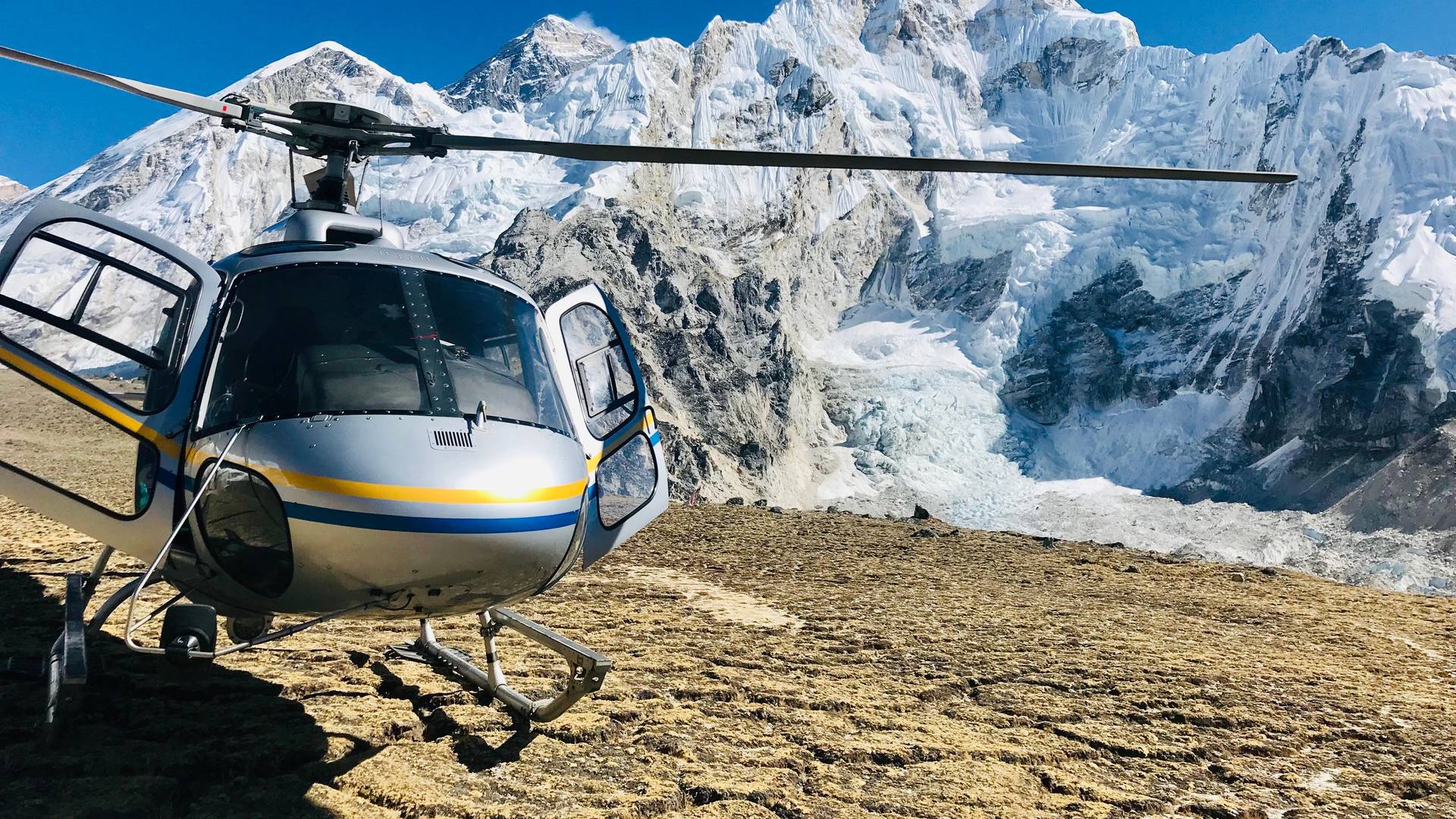
What to Wear on an Everest Helicopter Tour What to Bring
Three layers, a hat and gloves for 10 to 15 minutes at 5,545 m. Bring your passport, rupees and sunglasses; leave large bags at the hotel.
Wear three layers on an Everest helicopter tour: a thermal base layer, a fleece or light down jacket and a windproof shell, with trekking trousers and closed shoes with grip. Add a warm hat and gloves from October to March. Bring your passport, Nepali rupees for the fees, sunglasses and sunscreen, and leave large bags at the hotel.
What to wear on an Everest helicopter tour?
Three layers you can open and close: a thermal base layer, a fleece or a light down jacket, and a windproof shell on top. On your legs, trekking trousers and closed shoes with a grip. You spend most of the morning in a heated cabin and 10 to 15 minutes outside at 5,545 m, so the layers have to work for both.
Leave the jeans at the hotel. One operator points out that jeans do not insulate when it is cold.
Wear a hat that fits under a headset. Passengers are given headphones in the helicopter.
What should you wear in each season?
The same three layers all year, with the head and hands changing. From October to March operators add a warm hat and gloves; one gives about −15 °C at Kala Patthar in winter. In spring a sun cap replaces the warm hat. Sunglasses, sunscreen and lip balm are on the list in every season.
Warm hat that fits under the headset
Sun cap
UV sunglasses, high-SPF sunscreen, lip balm
UV sunglasses, high-SPF sunscreen, lip balm
Thermal base layer, fleece or light down jacket, windproof shell
Thermal base layer, fleece or light down jacket, windproof shell
Warm gloves
Thin gloves for handling the camera
Trekking trousers. No jeans: they do not insulate
Trekking trousers. No jeans: they do not insulate
Closed shoes with grip
Closed shoes with grip
No source gives a temperature for the landing in summer, so we do not print one.
What should you bring on an Everest helicopter tour?
Little, and all of it in one small daypack: your passport, cash in rupees, sun protection and a camera with a spare battery. Bags are weighed with you and count toward the load, so operators ask you to leave suitcases at the hotel.
The original passport: it is needed at check-in
Nepali rupees: the park and local fees are taken in cash
UV sunglasses, high-SPF sunscreen and lip balm
A spare battery and a lens cloth: cold drains batteries
One small daypack per person
Your own snack and water: meals are not in the base price
Suitcases and large bags
A drone: it needs four separate approvals to fly in the park
Jeans: they do not insulate in the cold
What is not allowed on board?
Large bags, drones flown without the park's permits, and anything loose in the cabin during turbulence. Passengers stay seated with seatbelts fastened while the helicopter flies, and operators do not carry anyone who is drunk or disruptive. At Kala Patthar you may take nothing from the site and leave nothing behind.
| What | Rule |
|---|---|
| Large bags | Stay at the hotel: bags count toward the load |
| Drones | Four approvals needed to fly in the park |
| Seatbelts | Fastened whenever the helicopter flies |
| Alcohol | No one drunk or disruptive is carried |
| Kala Patthar | Take nothing, leave nothing |
A drone is the common mistake. Flying one in Sagarmatha National Park needs a registration with the aviation authority and approval letters from three more offices. Tourists should not bring one expecting to fly it.
Cameras and phones are fine. Keep them on a strap or in a pocket.
What is the weight limit on an Everest helicopter tour?
There are two limits. Two GetYourGuide listings set 100 kg per passenger, and one of them says a heavier guest may be charged extra. The second limit is for the group: above about 240 to 250 kg, or more than three passengers, the helicopter does not carry everyone to Kala Patthar at once.
Everyone is weighed at the airport, bags included. The crew then decides the seats, to balance the helicopter.
Give your real weight when you book. Several listings say that a limit applies without printing the number.
Which documents and how much cash do you need?
Your original passport and enough cash for the fees and breakfast: about 6,000 to 7,000 rupees per person for the park, the local government and airport tax, and $25 to $40 for breakfast at Hotel Everest View where it is not included. Operators take the fees in rupees or dollars.
- Passport, the original: shown at the domestic terminal.
- Rupees for the fees: about 3,000 for the national park, 3,000 for the local government and 500 per airport.
- Money for breakfast: $25 to $40, and the hotel takes cards.
- Your booking confirmation, with the pickup time.
Some listings include the fees. Read the "not included" list before you count the cash.
Where are the toilets, food and phone signal on the route?
At Hotel Everest View, and almost nowhere else. The hotel has a restaurant, a terrace, a shop and free Wi-Fi, and it takes cards. Kala Patthar has no toilet, no shelter and no food. For Lukla and Pheriche our sources state very little, so the route block marks only what they do say.
45 min
25 min from Lukla to Kala Patthar, by way of Pheriche
2–3 guests go up at a time
12 min
About 1 hour often with fuel at Lukla
Use the toilet at the hotel in Kathmandu and at the airport. The next certain one is at Hotel Everest View, more than two hours later.
We found no verified statement on phone signal at Kala Patthar or Pheriche.
How do you take good photos through the window and at Kala Patthar?
Shoot fast and keep the lens against the glass. Helicopter windows reflect, the cabin shakes and Everest is far away, so operators advise a fast shutter speed, a zoom lens and a hand or a lens hood to block reflections. At Kala Patthar you have 10 to 15 minutes in the open.
- Set a fast shutter speed before take-off.
- Hold the lens close to the window and shade it with your hand.
- Use the zoom for Everest: it is far away even from the helicopter.
- At the landing, take the wide view first. The time goes quickly.
- Wear thin gloves so you can work the camera.
You cannot choose your seat. The crew sets the seats by weight. Front and side seats give the better pictures.
Which Everest helicopter tour should you pack for?
It depends on whether your flight lands at Kala Patthar. On a flight without the landing the highest place you stand is the terrace of Hotel Everest View, at 3,880 m. On a flight with the landing you stand in the open at 5,545 m, and every layer on this page is needed.
The hotel terrace is the highest stop. A warm jacket is enough.
The 3-hour flightTen to fifteen minutes in the open: every layer.
The two-at-a-time landing flightThe same layers, then breakfast at the hotel.
The most-reviewed landing flightPack for the landing if your listing has one, even as an add-on.
Check dates for the two-at-a-time landing flight
Live availability from GetYourGuide. The price for your date is shown before you pay.
FAQ
Do you need a down jacket?
A fleece or a light down jacket under a windproof shell is what operators recommend.
What shoes should you wear?
Closed shoes with a grip. You walk a few steps on uneven ground at the stops.
What is the Everest helicopter tour weight limit?
Two listings set 100 kg per passenger. Above about 240 to 250 kg for the group, the helicopter goes up to Kala Patthar in turns.
Can you bring a bag?
One small daypack per person. Large bags stay at the hotel.
Can you bring a drone?
Not to fly: a drone needs four separate approvals in Sagarmatha National Park.
Is there oxygen on board?
Operators say supplemental oxygen is available on request.
Can you bring food and water?
Yes. One source says you can bring your own food and drinks.
Do you need cash?
Yes: about 6,000 to 7,000 rupees for the fees, unless your listing includes them.
Pack light. Then book.